Lith Corporation, founded in 1998 by a group of material science doctor from Tsinghua University, has now become the leading manufacturer of battery lab&production equipment. Lith Corporation have production factories in shenzhen and xiamen of China.This allows for the possibility of providing high quality and low-cost precision machines for lab&production equipment,including: roller press, film coater,mixer, high-temperature furnace, glove box,and complete set of equipment for research of rechargeable battery materials. Simple to operate, low cost and commitment to our customers is our priority.
Vacuum Coating System: Advanced Equipment for High-Performance Surface Engineering
Overview
A Vacuum Coating System is a sophisticated piece of industrial and laboratory equipment designed to deposit thin films onto the surface of materials under controlled vacuum conditions. The system operates based on advanced physical or chemical deposition technologies that allow materials to be evaporated, sputtered, or chemically deposited onto substrates to form uniform and functional coatings. Vacuum coating technology plays a crucial role in modern manufacturing and scientific research because it enables the creation of extremely thin, high-purity layers with precise thickness control and excellent adhesion.
Vacuum coating systems are widely used in industries such as electronics, optics, automotive manufacturing, aerospace, energy, and decorative coating. By operating in a vacuum environment, the system minimizes contamination from air molecules and ensures that the deposited films maintain high structural integrity and performance. With continuous technological advancements, modern vacuum coating systems offer high automation, excellent repeatability, and efficient production capabilities, making them an essential tool for advanced surface engineering.
Features
Modern Vacuum Coating Systems are designed with multiple integrated components that ensure efficient operation and precise coating performance.
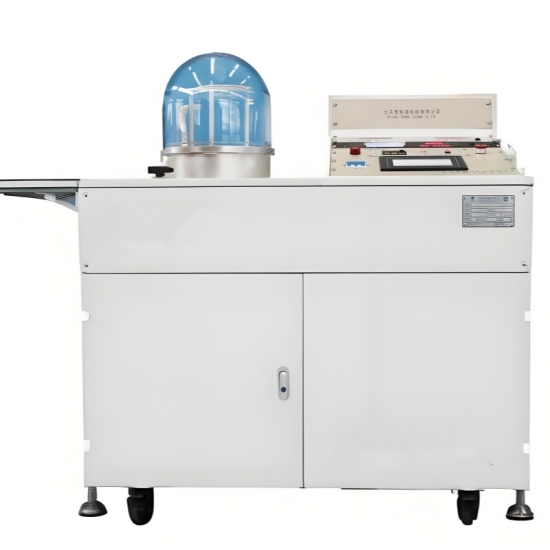
One of the most critical components is the vacuum chamber, which provides a sealed environment where air and impurities are removed using vacuum pumps. Achieving a high vacuum level is essential for stable film deposition and maintaining coating purity.
Another key feature is the deposition source, which can vary depending on the coating technology being used. Common deposition methods include thermal evaporation sources, magnetron sputtering targets, and chemical vapor deposition systems. Each method allows different materials and coating properties to be achieved.
Vacuum coating systems also include advanced control systems that allow operators to monitor and adjust process parameters such as pressure, temperature, deposition rate, and coating thickness. Many systems incorporate quartz crystal monitoring devices to provide real-time feedback on film growth.
Additionally, substrate holders and motion systems are designed to rotate, tilt, or move the substrates during coating. This ensures uniform film deposition across the entire surface of the workpiece.
To support long-term reliability and compatibility with various materials, vacuum coating systems are typically constructed using high-quality stainless steel and corrosion-resistant components. Many modern systems also feature automated loading mechanisms and programmable coating recipes, which improve operational efficiency and process consistency.
Process
The vacuum coating process typically begins with the preparation of the substrate. Substrates must be thoroughly cleaned to remove contaminants such as dust, grease, or oxidation layers that may affect coating adhesion.
After preparation, the substrates are placed inside the vacuum chamber. Vacuum pumps are then activated to remove air from the chamber, creating a high-vacuum environment that allows atoms or molecules to travel freely during the deposition process.
Once the required vacuum level is achieved, the coating material is introduced through the selected deposition method. In thermal evaporation, the material is heated until it vaporizes. In sputtering systems, plasma ions bombard a target material and eject atoms that deposit onto the substrate. In chemical vapor deposition processes, reactive gases form thin films through chemical reactions at the substrate surface.
During deposition, parameters such as pressure, power input, substrate temperature, and deposition time are carefully controlled. The coating gradually forms as atoms condense onto the substrate, creating a thin, uniform layer with specific functional properties.
After the coating process is completed, the system is allowed to cool, and the vacuum chamber is slowly returned to atmospheric pressure before removing the coated components.
Vacuum Evaporation System
Applications
Vacuum coating systems are used across a wide range of industries due to their ability to produce highly controlled and functional surface coatings.
In the electronics and semiconductor industry, vacuum coating is used to deposit conductive layers, insulating films, and protective coatings for integrated circuits and electronic components.
In the optical industry, vacuum coatings are applied to lenses, mirrors, and optical filters to enhance reflectivity, reduce glare, or control light transmission.
The automotive and aerospace sectors use vacuum coating systems to improve surface hardness, corrosion resistance, and wear resistance of mechanical components.
In the energy industry, vacuum coating plays an important role in the production of solar panels, fuel cells, and energy storage devices.
Additionally, vacuum coating is widely used for decorative applications, such as applying metallic finishes to consumer products, jewelry, and architectural materials.
Advantages
Vacuum coating systems provide several significant advantages compared with traditional surface treatment technologies.
One major advantage is high film purity. Because the coating process occurs in a vacuum environment, contamination from air and environmental particles is greatly reduced.
Another benefit is excellent coating uniformity and adhesion. The controlled deposition process allows thin films to bond strongly with substrate surfaces while maintaining consistent thickness.
Vacuum coating also enables precise control of film properties, including thickness, composition, optical characteristics, electrical conductivity, and mechanical hardness.
In addition, these systems offer broad material compatibility, allowing metals, ceramics, semiconductors, and composite materials to be coated effectively.
Finally, vacuum coating processes are environmentally friendly compared to some traditional chemical coating methods, as they typically produce fewer hazardous by-products and require less chemical waste handling.
Conclusion
The Vacuum Coating System is a vital technology in modern surface engineering and advanced manufacturing. By providing a clean and controlled environment for thin film deposition, these systems enable the production of high-quality coatings with exceptional precision and performance.
With applications spanning electronics, optics, automotive engineering, renewable energy, and decorative industries, vacuum coating technology continues to play a key role in improving product functionality and durability. As advancements in automation, vacuum engineering, and deposition techniques continue to emerge, vacuum coating systems are expected to become even more efficient, versatile, and widely adopted in future industrial processes.


 +86 13174506016
 Louis@lithmachine.com
 +86 18559646958
 18659217588
 English ▼


