Lith Corporation, founded in 1998 by a group of material science doctor from Tsinghua University, has now become the leading manufacturer of battery lab&production equipment. Lith Corporation have production factories in shenzhen and xiamen of China.This allows for the possibility of providing high quality and low-cost precision machines for lab&production equipment,including: roller press, film coater,mixer, high-temperature furnace, glove box,and complete set of equipment for research of rechargeable battery materials. Simple to operate, low cost and commitment to our customers is our priority.
Microwave Furnace – Professional Mechanical Equipment Introduction
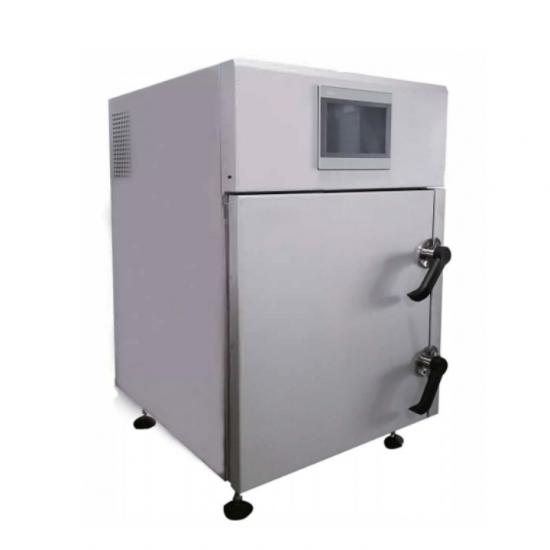
A Microwave Furnace is an advanced thermal-processing system that utilizes microwave electromagnetic energy to heat, sinter, melt, or react materials. Unlike conventional furnaces that depend on external heat transfer through conduction, convection, or radiation, a microwave furnace achieves volumetric heating, where electromagnetic waves penetrate the material and generate heat internally. This unique mechanism results in faster heating rates, reduced energy consumption, and improved uniformity, making the microwave furnace a highly efficient solution for modern materials science, chemical engineering, and industrial processing.
1. Concept of the Microwave Furnace
A microwave furnace operates by generating microwaves—typically at 2.45 GHz or 915 MHz—and directing them into a specially designed cavity. When the microwaves interact with polar molecules, ions, or conductive particles within the material, they cause rapid oscillation and internal friction, producing heat throughout the volume of the workpiece. This direct coupling of energy with the material distinguishes microwave heating from traditional surface-based thermal systems, significantly enhancing both heating efficiency and process controllability.
2. Structural Design
A microwave furnace consists of several integrated mechanical and electrical subsystems:
• Microwave Generator
Usually powered by a magnetron or solid-state microwave source, delivering stable microwave energy at controlled power levels.
• Waveguide and Coupling System
These components transport microwaves from the generator into the furnace chamber. They are precisely engineered to ensure minimal energy loss and uniform field distribution.
• Furnace Cavity
Constructed from microwave-transparent refractory materials such as alumina, mullite, or zirconia. The cavity may be multimode or single-mode depending on application requirements.
• Thermal Insulation System
High-temperature insulation materials maintain internal temperatures ranging from 300°C to 1800°C, depending on the model and use case.
• Temperature Measurement and Control
Thermocouples, optical pyrometers, and infrared sensors provide real-time temperature feedback, enabling closed-loop precision control.
• Safety and Cooling System
Includes electromagnetic shielding, interlock door mechanisms, and air- or water-cooling modules to protect electronic components and ensure safe operation.
3. Key Characteristics
• Volumetric Heating
Microwaves heat the entire material simultaneously rather than heating surface first, providing significantly faster thermal response.
• Selective Heating
Materials with high dielectric loss absorb microwave energy preferentially, allowing targeted heating or reaction control.
• High Energy Efficiency
More than 80% of input energy can be effectively absorbed by the material, reducing overall thermal loss.
• Rapid Temperature Ramp
Heating rates can reach hundreds of degrees per minute, enabling accelerated sintering and reaction processes.
• Clean Processing Environment
Microwave heating does not involve combustion, reducing contamination and improving environmental safety.
Lab Furnace
4. Process Technology
Microwave furnaces support a wide range of thermal processes, including:
• Sintering
Applied to ceramics, metal powders, and composite materials. Microwave sintering enhances densification while limiting grain growth.
• Melting and Metallurgical Reduction
Microwaves reduce energy consumption in metal melting, ore reduction, and alloy refining by directly heating the material.
• Pyrolysis and Carbonization
Used for biomass conversion, polymer decomposition, catalyst regeneration, and waste treatment, offering controlled and clean thermal decomposition.
• Calcination and Thermal Activation
Efficient for activating catalysts, preparing electronic materials, or modifying surface properties of functional materials.
Advanced models may combine microwave and resistance heating for improved compatibility with materials that initially absorb microwaves poorly.
5. Industrial Applications
Microwave furnaces are widely used across multiple industrial sectors:
• Advanced Ceramics
For producing structural ceramics, bioceramics, transparent ceramics, and dielectric materials.
• Powder Metallurgy
For sintering tungsten, molybdenum, stainless steel, magnetic materials, and hard alloys.
• Chemical & Environmental Engineering
Used in hazardous-waste treatment, catalytic cracking, pyrolysis, and activated carbon production.
• Electronic Materials
For processing ferrites, battery materials, and semiconductor ceramics requiring precise thermal control.
• Research Laboratories
Microwave furnaces offer flexible, programmable thermal environments suitable for material development and scientific experimentation.
6. Advantages
• Shortened Processing Time
Heating is significantly faster than conventional furnaces, often reducing cycle times by 50–80%.
• Improved Material Microstructure
Internal heating promotes uniform densification and minimizes grain coarsening, enhancing mechanical properties.
• Lower Operational Costs
Reduced energy usage and shorter processing cycles save considerable production costs.
• High Temperature Uniformity
Multi-mode cavity design and field stirrers help eliminate hot spots and improve overall consistency.
• Eco-Friendly Operation
No combustion emissions, lower carbon footprint, and minimal thermal pollution.
• Enhanced Process Control
PLC automation, recipe management, and intelligent sensing enable stable, repeatable thermal processing.
Conclusion
The Microwave Furnace represents a transformative thermal-processing technology that combines efficiency, precision, and sustainability. Its innovative volumetric heating mechanism, advanced structural design, and versatile industrial applications make it an essential tool in modern manufacturing and materials research. Whether used for sintering ceramics, reducing ores, performing pyrolysis reactions, or producing high-performance materials, the microwave furnace delivers superior results with remarkable energy and time savings.


 +86 13174506016
 Louis@lithmachine.com
 +86 18559646958
 18659217588
 English ▼


